Structural Engineer
The proper design of any building is a dance between a the Architect and Structural Engineer.
Fundamental to the success of this dance is a mutual respect between these two players. Both must know what the others strength is and where they must be clear where they are to lead.
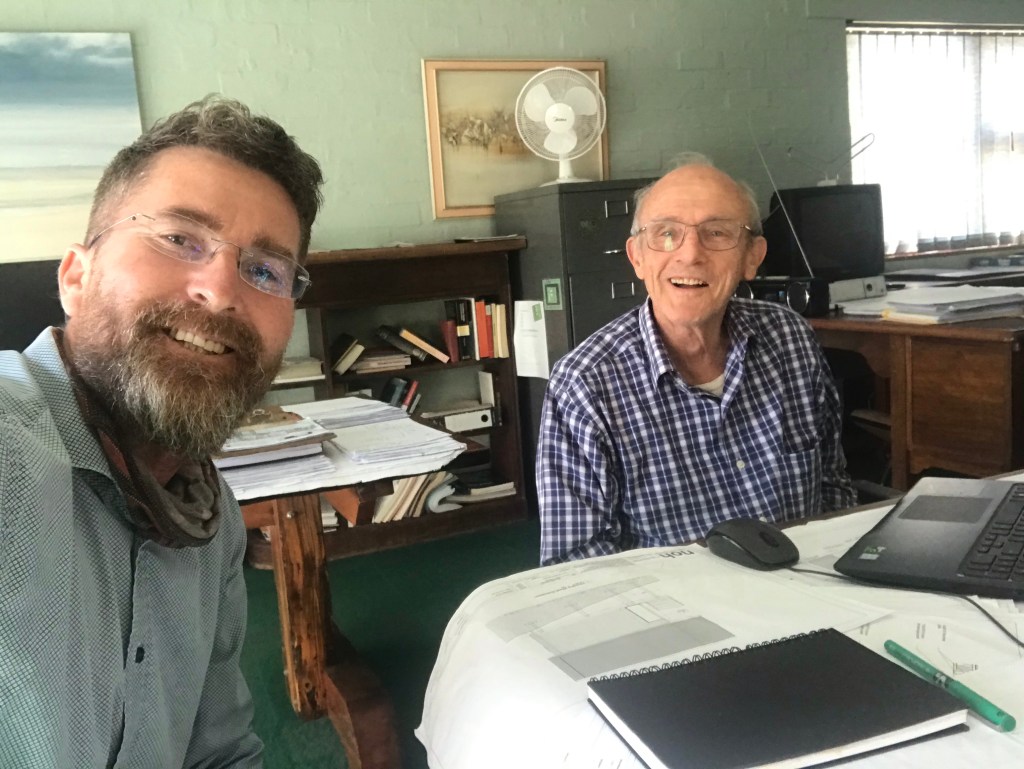
What technology goes into building a TimberTiny home?
The short answer to this question is ” We use no new or clever tech at all!”

We are proud of this fact. We wear it like a badge.
While our units are comfortable and beautiful, they rely on nothing new, nothing clever and nothing novel. I know this could sound boring to some people, but the truth is that the reason we do not have many many more Timber houses or Tiny houses in South Africa and the world is not because of the shortage of technology to build them. The technology exists, it’s just that the construction industry in South Africa has got itself stuck in a rut Thankfully though, there are a growing number of innovative home home builders that are ready and willing to break out of the mould and do things differently.
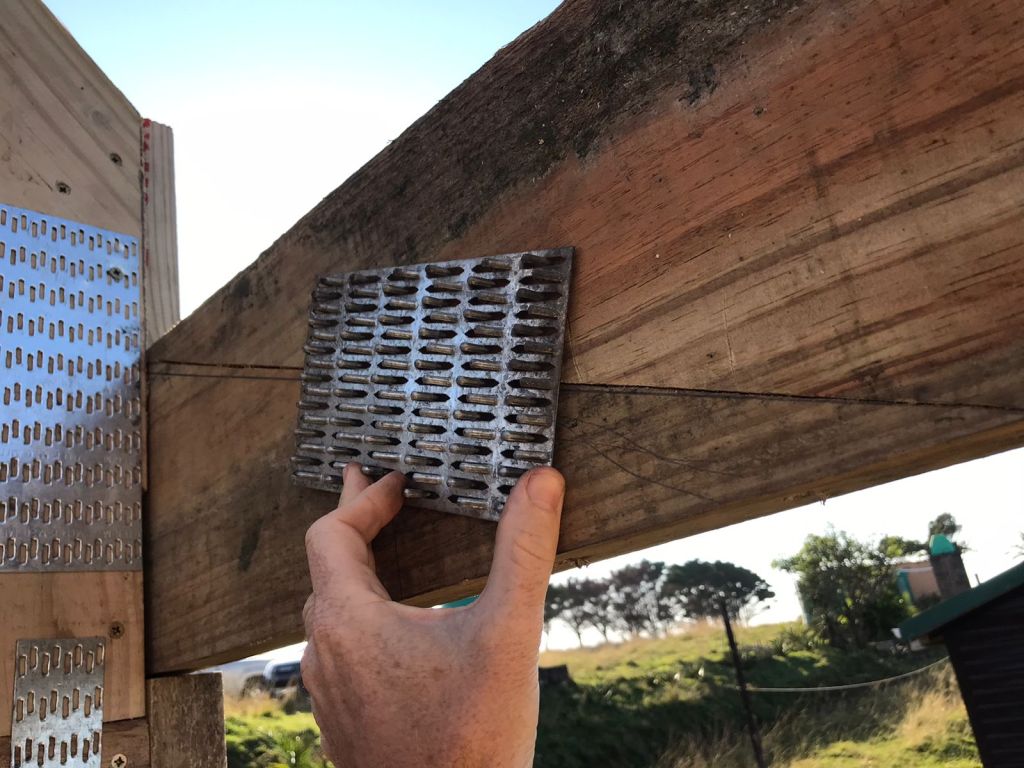
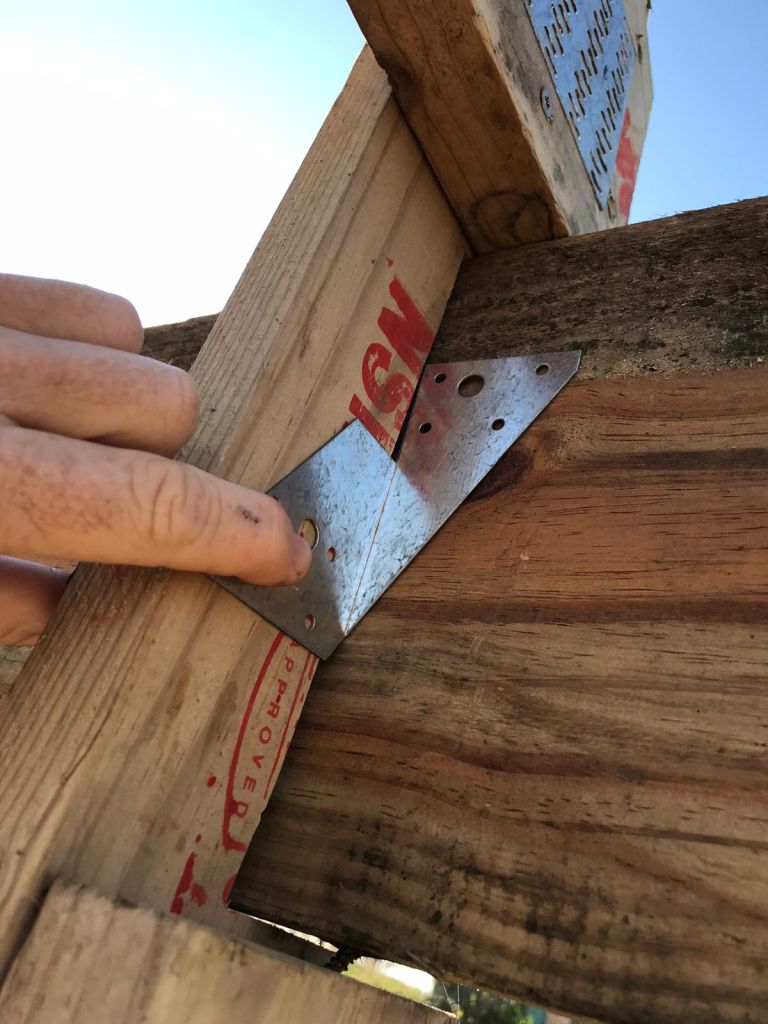
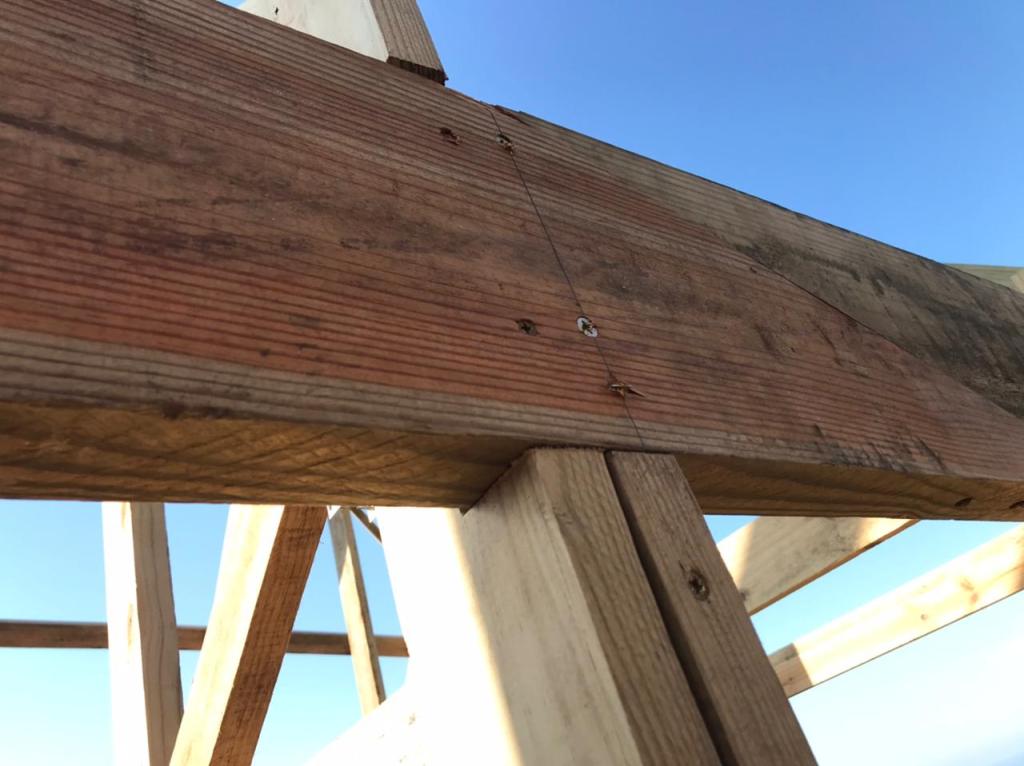
The truth is that all we have done at TimberTiny is to put together ordinary components and ordinary material with ordinary tools, but we have put them together with love and care in such a way as to make them special, clever and distinct.



Design and Build – It just makes sense!
I have been designing buildings for some time now. (by far the most of that time at noh ARCHITECTS) I love it. Its stimulating and productive at the same time.

I mean how lucky am I to have something physical show after (a good part of a lifetime) of work? So many of my (often very hardworking and intelligent) friends tell of how soul destroying it can be, after many years of perhaps being a Parliamentarian, a Pilot or a Barrista and not being able to point to any one lasting thing that you have shaped and birthed into the world. I speak about my gratitude toward my profession, because I don’t want to come across as un-thankful when I talk about the frustration of starting from scratch every time, from one “prototype” to next. You see each and every building that an ordinary architect works on is a bespoke prototype. Never to be repeated. Almost by definition, an architect is approached because a design solution does not yet exist to satisfy the needs of the client that is approaching the architect. When the same client approaches the BMW dealership or the I-store, they are presented with very good design solutions that actually work for them in their world. The client is relieved of the burden of having to present a “brief” to BMW so that they can develop a prototype design that would suite these needs.
What I find satisfying as an Architect, developing the TimberTiny range, is the following:
The “design and supply”, method now breaks the cycle of continuous prototyping and by breaking this cycle it allows me as an architect to “go deep and not go wide”, What do I mean by that? I suppose just the simple economics of being able to justify the time and effort on the design of what are by architects standards, very small projects.

The “design and supply” method is able to extract design refinements and solutions from all parts of the process (Client interaction, finance, manufacturing, construction, supply chain and logistics). The conventional approach to bringing buildings into the world has much greater degree of isolation between the “silos” of Architectural Design, Structural Design, Manufacturer and Assembly. The traditional way of building is very often a protracted standoff between the various silos, each consuming huge amounts of energy defending their positions and covering their A****s!

The design and supply method does not have to mean that the client ends up with something they don’t want, This is certainly not the case with BMW and it is certainly not the case with Iphone. The sad truth though is that so many of the “design and supply” homes in the market today are just horrible!! My theory though is that these products are horrible because so many of them have been brought to the market by companies familiar with supply, not design. (they know how to make stuff – but they are not necessarily as good at knowing what stuff to make!) And this is where TimberTiny stands out from the crowd. TimberTiny comes out of a design space that pushed to expand into the supply space. This is a crucial and critical distinction (and perhaps the distinction that Steve Jobs brought to Apple over the years.)
So Yes! Design and Build makes real sense – Our objective is to make the process seem effortless to you. Building really shouldn’t have to be the nightmare that everyone speaks of!!!
Schooling without schools and other lessons from 2020

(This piece first appeared in The Herald on 3 March 2021 – the reason I have posted it here is because much of the discussion about is very relevant to the Tiny House movement right now. The Tiny House movement in South Africa is frustrated by Zoning, Regulation and By-Laws that significantly limit individuals ability to respond with flexibility to changing and uncertain times. We need to be able to much more easily re-purpose our properties to be able to be part of the solution to South Africa’s critical housing shortage. So please, read this article then go harass your local mayor or your local parliamentarian. This movement needs leadership from the top in addition to the huge momentum coming from ordinary people at the bottom like you and me.)

I must admit that I had only a passing interest in the 2020 Matric results released last week. I have been busy with other things and I refused to be drawn by those who would like to entangle me in pointless political discussion and develop an opinion on whether these results serve as evidence that the government is doing a good, bad or average job. I can tell you though that what did catch my interest is what I did not see. What struck me, in fact, was the absence of a widespread collapse of the matric results in spite of the fact that for the most part of the 2020 school year, those preparing for matric were not able to make use of the very expensive buildings we have come to think of as essential to the education system. Rather, what we saw was the incredible resolve of ordinary learners and ordinary parents and ordinary teachers doing whatever they could with whatever they had, to overcome what was by all measures and extraordinarily terrible year.
Architects (and others in the construction industry) found to their dismay perhaps that the sad fact that school buildings could not be used for the most part of 2020 did not seem to devastate learning and teaching. You see, Architects are generally blessed with very large egos and it is very hard for us to come to terms with the fact that the buildings we commit our lives to creating are not the centre around which the universe revolves! Besides, we are still reeling from the blow to our sense of worth dealt by the #FeesMustFall campaign of 2017. Let me explain. I remember being an external examiner that year for an incredibly talented group of final years in the Nelson Mandela University Masters degree in Architecture. For much of 2017 these students preparing for the exam could not get to campus. They could not access the library, the studio or the labs. When it came to the exhibition and examination, that was the climax of their year, they were prohibited by those threatening violence, from using the Architecture department’s studio space at NMU’s south campus. Seemingly unperturbed, the clever leadership at the NMU Architecture department made arrangements and transformed the City Hall in Govan Mbeki avenue into a very comfortable (and in fact memorable) examination and exhibition venue. I found to my surprise that other departments and faculties had made similar arrangements in public buildings throughout the city to ensure that their students were able to safely and comfortably continue with the examinations programme. I was left wondering that year if the very successful response by the NMU leadership to the #Feesmustfall campaign’s attempt to deprive students access to the campus meant that we no longer needed university buildings? In the same way, I am now left wondering if the acceptable Matric 2020 results mean that we no longer need school buildings. But after having given this some thought over the weekend, I can tell you that, no, I don’t think so. We do need these buildings. But I do think that the events of 2020 (and of 2017) help us see that we have significant spare capacity in our building stock. There is spare capacity in middle class houses that allow schooling to continue in the case of a COVID lockdown and there is notable spare capacity in civic buildings throughout Nelson Mandela Bay that will allow even large institutions like the NMU to run a complicated and sophisticated examinations programme without the use of its campuses.
So what is this truth telling Architects and the construction industry? No, the message is not that we don’t need any new buildings ever again. I think rather the clear message is that we need to design and plan for flexibility. We need to design and plan for the inevitability (not just the possibility) that our buildings will need to be re-purposed many times over in their lifetimes. The one thing that we know about the next crisis is that it is very unlikely that we will be any good at predicting it and therefore very unlikely that we can make any specific plans for it. What we do know though is that we can make ourselves ready for change. What this means practically in the built environment is that we need Land Use Management systems that allows repurposing to happen effortlessly and organically. We need a Land Use Management system that allows and promotes continuous tinkering and tweaking of buildings to meet what is very likely to be the almost continuous environment of change that we will face for the foreseeable future. Gone are the days when we can cut and paste the zoning schemes, by-laws and regulations that limit and give shape and form to our city. This kind of cut and paste thinking will not do in politics, it will not do in business and it certainly will not do in the built environment. Our future success demands constant tinkering with and re-purposing of our political institutions, constant tinkering and re-purposing of our business institutions and constant tinkering with and re-purposing of our built environment. This is the only way in which our economy and our society will continue to evolve new strength and the only way in which we stand any chance of surviving the next crisis that we know will come.
Exploring the Relationship Between Land Use Right Restrictions and Wealth Inequality
We are constantly challenged in South Africa (and all over the world) by Municipalities, Governments, Homeowners Associations and all manner of other agencies, who see it as their mission and purpose to prevent ordinary people like you and me from building what we would like to build for ourselves with our own precious time and our hard earned money. All that many of us want to build is a Tiny House (very often we would like to build a Timber Tiny House) but we are frustrated at every turn.
While I have spent much of my professional career as an Architect learning how to navigate these (often mindless) controls, I have also spent some time thinking about the exacerbating effect that these kinds of controls and restrictions have on the growing and dangerous gap between the rich and the poor in South Africa.
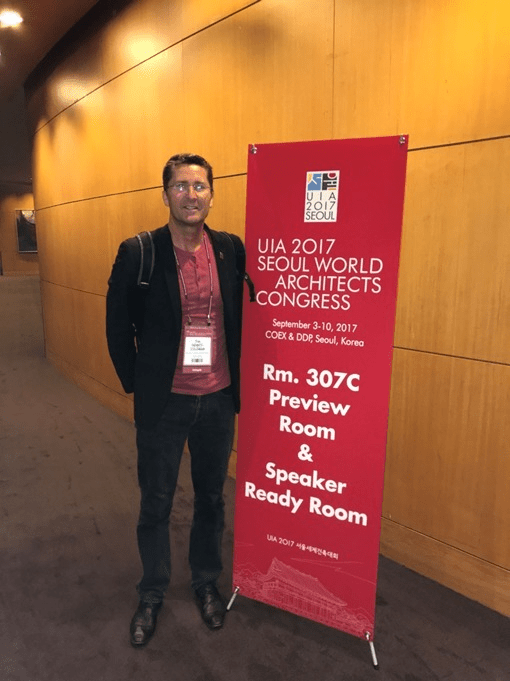
In 2017 I collected some of these thoughts into an Academic Paper that I presented at the World Congress of Architects in Seoul. The Paper was very well received there and I share it with you here as well with the hope that it will stimulate debate and discussion and perhaps lead to a better future where we are free to build!!
1. Introduction
It has become widely understood that wealth inequality is a significant threat to stability and sustainability. Even in advanced economies like the US the reality is that the 10% that make up the wealthiest part of the population own 76% of the country’s assets. The French economist Thomas Piketty argues that “extremely high levels” of wealth inequality are “incompatible with the meritocratic values and principles of social justice fundamental to modern democratic societies” and that “the risk of a drift towards oligarchy is real and gives little reason for optimism.” Piketty, T, and Ganser, L. J. (2014)
The basic premise of Piketty’s argument is those whose livelihoods depend on labour (blue and white collar) tend over time to have to work harder and harder to maintain their status quo. By contrast those that own assets tend to become wealthier and wealthier. More significantly to the architects reading this paper is that we know from an analysis of Piketty’s data by Matthew Rognile, an American scholar, that in fact the growth in wealth among those who own assets can largely be ascribed to real estate assets and not to equities. Rognlie, M. (2016)
Since at very least the time of Marx and Engels, scholars and politicians have discussed, formulated and proposed a broad range of solutions to wealth inequality and motivated their work as an attempt to respond to a threat to global order. Most recently Thomas Picketty has proposed a progressive wealth tax as an essential component to any economy aiming for stability. Piketty, T, and Ganser, L. J. (2014)
Picketty’s “wealth tax” falls into the category of strategies that the state can employ through coercing the citizenry into doing what they would otherwise not choose to do. It is understood that scholars and politicians would resort to proposing coercion in the absence of any other seemingly workable macro solutions. This paper will therefore begin to explore the possible effectiveness of “micro” solutions born out of industry specific knowledge gained through years of professional practice. It will explore the detail as it applies to the real estate and construction sectors and to the Architect’s profession. This paper will not seek to add complexity to existing strategies to address wealth inequality. It will not propose new legislation or regulations that serve to further coerce or constrain private individuals. This paper explores rather the potential impact of simplifying the approach toward land use rights and building controls with the aim of initiating a discussion around the relationship between land use right restrictions and wealth inequality.
2. Defining land use controls
In Port Elizabeth, where I have lived and practiced as an architect for the last twenty five years, owning a piece of land does not necessarily mean that you are free to use this land as you please. While you are free to sell the land or generate and income through rental, the manner in which you use the building and the manner in which permanent changes and improvements are made are restricted by a range of land use right restrictions and building controls. While controls and restrictions may vary, the following schedule of controls and restrictions would apply to a sample site in Port Elizabeth.
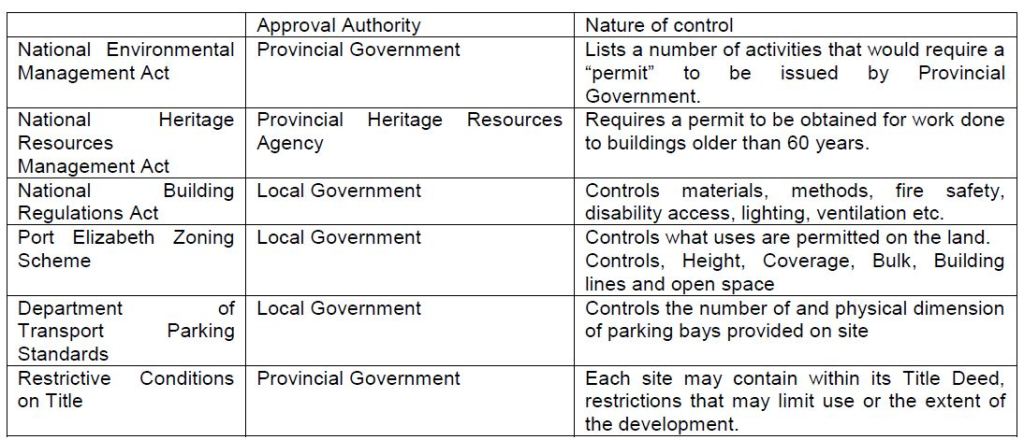
*In addition to these controls more specific by-laws are developed from time to time to limit specific uses including keeping animals, accommodating paying guests or accommodating students.
3. How do land use right restrictions impact on wealth inequality?
It may not be immediately obvious that restrictions on land use rights as expressed in zoning schemes, building regulations and other “compliance measures” are not in the public interest. When they are discussed at all, they are defended as necessary devices to avoid urban chaos and mayhem. The scientific evidence however for this supposed chaos and mayhem is very thin. We have reviewed the National Environmental Management Act, National Heritage Resources Management Act, National Building Regulations Act, Port Elizabeth Zoning Scheme, The Nelson Mandela Bay Guest House Policy and the South African National Department of Transport Parking Standards. Not one of these documents quote any case study or any scholarly work that predicts the chaos and urban mayhem that would emerge should these restrictions on personal freedom not be imposed. What is clear and beyond discussion or dispute is that land use controls have the very powerful effect of entrenching the status quo. Any attempt to change the status quo is met with complicated compliance hurdles that need to be overcome. So while being defended as necessary devises to maintain urban order, land use right restrictions serve to maintain and the status quo of the built form making it difficult for new entrants in to the market. Since, as it can be seen from Rognlie’s work, much wealth accumulation actually arises from the ownership of real estate Rognlie, M. (2016), any attempt to maintain an urban form status quo, must simultaneously be understood to be an attempt to maintain (if inadvertently) a wealth inequality status qou.
Those individuals attempting for the first time to build wealth through real estate are confronted with a set of building regulations that are very difficult to comply with when working in such a way as to best mobilise sweat equity. Building materials that are freely available, such as those required for wattle and daub wall construction or round pole roof construction for example, are not permitted by the national building regulations. While South Africa has a rich and varied pre-colonial architectural tradition, Frescura, F. (1981) traditional building skills have also been lost (partly as a result of the imposition of building regulations making the application of these
traditional skills illegal). The net effect of the imposition of building controls historically in South Africa has been to outlaw traditional building methods, bringing to an abrupt end the evolution of building materials and methods that comes with societies that urbanise organically outside of the context of colonialism. This evolution of building technique from rural to urban circumstance is evident throughout Europe, India and China but largely absent in societies that have been colonised. While this may appear to be a subject of importance perhaps only to architectural historians, the loss of a tradition of building to meet a families’ housing needs, has had a significant impact on wealth creation over passing generations. Those new entrants into the market, who do manage to acquire a structure compliant with the National Building Regulations, find themselves limited in a number of ways. They very often may not build on the full extent of their site (limited by coverage and bulk factors). Their attempts to increase their wealth by adding value to the property are limited by these controls. They are very often limited in the uses they may put their property to. Their ability to grow their wealth by adding revenue generating actives to their land is severely curtailed. The height to which they are able to build is very often limited, once again limiting the value that could have been added and thus the wealth growth opportunities.
Because of a pattern of restriction on land use rights over the years, the understanding that changing the status quo is very complicated and time consuming has become common among landowners. The impact of this “common knowledge” is to dissuade land owners from ever attempting to build wealth through expanding their own properties. This results in either spending on non-investment grade consumer items or in allocating resources toward poorly performing listed assets or derivatives thereof marketed by the financial planning industry. The available research on the impact of land use rights on wealth inequality is sparse or only indirectly relevant. The research however on the impact of the tendency of land use rights to dissuade landowners from consider changing the status quo is completely absent from scholarly literature. This is not surprising as it is of course very difficult to develop a methodology to quantify that which did not happen or that would have happened. Taleb, N. N. (2007). So while the points above illustrate the mechanisms that serve to limit the ability of new entrants and small land owners to fully exploit the wealth generation potential of their land, wealth inequality does not arise out of this phenomenon only by virtue of it being very complicated to close the wealth gap from the bottom up but also because those investors in the economy that already have significant wealth are able to negotiate the hurdles of land use right restrictions to release value and thus increase their wealth. In the case of land and land use rights it is certainly a pattern of the rich get richer, not only because the rich are able to purchase real estate in greater quantities, but because “the rich” are able to afford, the lawyers, town planners, environmental consultants, architects, engineers and heritage practitioners required to unlock the value in investment land. This is evidenced by the fact that by far the significant majority of new retail space, new office space and new industrial space in cities like Port Elizabeth results not from the small private land owners transforming their properties to meet these needs, but results rather from the work of big capital acquiring land and (at great expense) changing its rights to accommodate significant new investment.
4. What can be done?
In South Africa, as in many other parts of the world, land use rights and building controls are entrenched at many levels of government. To remove or modify them will prove to be a very complicated task requiring significant resources and determination. But before there can be any hope of progress in this regard, the important work that needs to be done is to develop a comprehensive “cost benefit analysis” of the barrage of land use right and building controls that are current and applicable. This paper postulates the hypothesis that land use right restrictions and building controls in their current form serve to not only perpetuate wealth inequality in South Africa, but in fact aid in the increasing the gap between the rich and the poor.
5. Disruption
The economy of Port Elizabeth, South Africa and the world, has been characterised since its establishment by a series of “disruptions”. A disruption can best be described as an innovation that creates new markets and radical transforms and industry or even an entire economy. Seba, T. (2014). Perhaps the first major disruption the Port Elizabeth region experienced was the introduction of an agricultural economy introduced by Nguni speaking
people migrating slowly from the north along the east coast of Africa. Beef, dairy and crop growing technologies combined with a whole range of implements possible with iron smelting technology, completely overwhelmed the pre-existing hunter gatherer economic model. Mostert, N. (1992) Evidence suggests that hunter gatherer economy that had existed for tens of thousands of years was completely disrupted and replaced with in a relative “blink of an eye”. Since that disruption there have been continuous waves of disruption characterised by among others, shipping and navigation, gun powder, telecommunications (since the telegraph), railways, the internal combustion engine, Air transportation, the internet and smart phones. Disruptions are very difficult to predict. Taleb, N. N. (2007) This fact is true even for the most well-resourced corporations in the world including those corporations who are highly specialised in the sector of the economy in which the disruption is about to occur. In 1985 AT and T famously predicted that the US demand for mobile phones would be no more than 900 000 by 2000. The actual figure was in fact will over 100 million. Seba, T. (2014) Governments have an even worse record at anticipating disruptions than do corporations. When we return to our focus on land use rights, we see that in places like Port Elizabeth where we find that restrictions on land use rights, have the potential to significantly impair and slow a region’s ability to take up new demand that may emanate from a future disruption.
This is especially significant in economies, like South Africa, that are attempting to transform existing and entrenched patterns of wealth distribution. This is true because one of the few things that we do know about disruptions is that they generally tend to not favour those already entrenched in the sector or the economy. AT and T was not the major beneficiary of the disruption caused by mobile phones in the US, the existing taxi industry was not the major beneficiary of disruption caused by Uber and horse breeders were not the major beneficiary of the disruption caused by the steam engines.
Transformation in patterns of wealth distribution is of course complicated and all encompassing, but where transformation touches land use rights, it is clear that we need to act firstly to remove land use right restrictions that are standing in the way of current and future disruptions. Presently, technologies like Air B and B are disrupting the short stay rental economy, but the Local Authority has on its books a “Guest House Policy” that would cause law abiding citizens to think twice before taking advantage of the sometimes significant revenue streams that would be accessed by making use of the simple, free disruptive technology.
Uber and its competitors have begun to disrupt the pattern of private motor vehicle ownership. One of the consequences is a dramatic reduction in demand for parking space at for example shopping centres or theatres. Henao, A. (2017) We know that government takes a long time to react. It takes a lot of effort to remove a regulation or a statute, the real fear therefore is that in spite of a disruption enabling a much greater percentage of the investment on each retail site being invested in retail space, that this will not happen very soon because of the length of time it takes for processes to pass through government. It is because of our poor track record in anticipating disruptions and governments poor record in in reacting quickly that we argue that the options under consideration must include the complete removal of land use right restrictions and building controls.
It is anticipated that there will be significant resistance and intransigence toward any campaigning for the removal of land use right restrictions and building controls. It is also anticipated that it will not be enough to popularise and analyse studies that point to the many success stories of cities with little or no planning.
A possible route to consider is that of the court system, where the attempt would be to show that land use right restrictions and building controls are an infringement on personal freedom that cannot be justified by any scientific evidence of harm that would be caused if this personal freedom were not infringed upon. While this route remains a possibility, what is required to precede such action, is a clear and defensible methodology to illustrate the beneficial economic impact of the removal or relaxation of land use restrictions and building controls. The route therefore proposed to test the hypothesis put forward in this paper, is the development of a computer model that is able to test the impact of relaxing or removing land use right restrictions and building
controls in the context of a functioning urban economy. It is proposed that we use data from the city of Port Elizabeth in the Nelson Mandela Bay Municipality to develop and test this model.
This type of modelling has been used with varying success for years to model demand for public and private transport. Sophisticated modelling packages have been able to test impact of various road building projects on trip times and other quantifiable measurable that enable policy makers and public executives to make decisions regarding the allocation of funds to public works projects. What we propose is the development of similar city-wide modelling software that is able to deliver clear physical, spatial and economic measurables resulting from the manipulation of land use right restrictions. The economic measurables we propose though should include, overall economic impact, impact on job creation, impact on wealth creation, impact on wealth inequality. Because of the number of variables involved it is anticipated that the computing power required of a model of this nature would be significant. The timing of this proposed model may therefore be especially appropriate given the continued rapid grown in computing power with machines now rapidly nearing human intelligence in some complex fields and already outstripping human performance in a number of less complex tasks.
6. Conclusion
Understanding land use rights and their impact on the potential of land to express its full development potential, is a highly technical field. Many architects through years of practice and working up against these land use right restrictions have become acutely aware of the impact that these controls have. In South Africa there exists a group of professionals that call themselves “Town Planners”. These professionals, in the South African context, are experts in the processes involved in changing land use rights from one form into another. Due to the amount of time that Town Planners spend dealing with the technical aspects relating to land use rights, they are well placed to articulate themselves on the subject. The fact however that the town planning profession relies for its income on Land Use rights existing (in as complex a form as possible), makes it less likely that voices will emerge from this profession that will honestly and critically reflect on the negative impact that land use right controls may have on society.
This being the case, Architects, as a group of professionals seem the most likely group to take up the cause of activism in this regard. This paper therefore reaches out to Architects to criticise and guide the activism and research that may be triggered by ideas contained herein. Feedback from this paper will guide the next step to be taken either by the author of this paper or by other individuals that may emerge as a result of the discourse that flows from it.
Feeling my way into 2021 and the exciting future beyond!
Good Morning my dear friends and colleagues.

It is a cool Saturday morning. I write to you in the stillness before the house awakes, when only my loyal and ever-present Great Danes Tank and Nakia are by my side on my study floor. I am writing to wish you all well for 2021 and to make the effort to tell you that I have a very good feeling about the year ahead. Yes. That’s right. I have a very good feeling. No proof. No science. No data. Just a very good feeling. In previous versions of myself I may have dismissed this feeling. I may have sniggered at it. I may rather have concerned myself about the facts of what we know about 2021 and about the future. But from the perspective that I have now come to enjoy, I can see that this way of thinking is completely messed up at very least at two different levels. Firstly, if anything has become clear to us about the events of 2020, then it’s that there are no “facts” about the future. (otherwise we would have known for a “fact” in January 2020 that the coming months would see all the chaos that come to be caused by COVID-19 and the response to it of governments and businesses across the globe) The truth of course is that there has never in the history of time been any “fact” about the future. There has only ever been speculation and the charlatans and chancers who peddle their speculation to you and to me for their personal profit and (short-lived) fame. The future is unknown. That is its nature. The future does not yet exist. Or put another way perhaps, an infinite number of possible futures exist (so, even if we could see them all at the same time, it would not help us one little bit to plan our day, plan our lives or to give expert advice to anyone, because we would have absolutely no way of telling which one of these possible futures would come to be.)
The second way in which I have come to see things a little differently from my earlier self, is that I now understand that when I say I have a good “feeling” about 2021, what I actually mean to say is that, that part of my brain that runs calculations at such an incredible speed that I cannot possibly follow consciously, has computed from all the data available to it that the coming year has a strong probability of being favourable to me. I have learned that the ability of this “unconscious” part of my brain to run calculations is far, far superior to that part of my brain that will actively, and with my full awareness, try to calculate 546 divided by 19 or the circumference of a circle with the diameter of 1,5 metres. It is this “feeling” part of my brain that runs the complex calculations when I throw a stone at tin can, or use my bow to shoot and arrow at a target (archery, for me, is much more enjoyable when I remove the cumbersome sights that are fixed by the bow and made use of in the competitive Olympic version of the sport of Archery). So, the new improved version of me takes “feeling” a lot more seriously. I know that feeling is not the opposite of thinking, but rather the kind of thinking that is able to draw on a whole lot of data that I may not be able to put into the kind of language that my “thinking” brain understands. Before I release the arrow toward the target, somewhere in my brain I am collecting and processing data from the pressure of the bow string on my fingers, the direction and intensity of the wind as it strikes my face, the distance to the target and the position of my feet and tension in the muscles of my back and arms. Somewhere in my brain I am collecting all this data that I am not even aware that I am collecting and mixing it up with a whole lot of stored data about my previous archery sessions and ultimately delivering a “feeling” that lets me “point” to the target and loose my arrow toward it. I have come to trust this “feeling” way of thinking in archery and I have also slowly come to trust it in other parts of my life too (like taking a view on how 2021 is likely to turn out!)
Over and above this feeling though, I am picking up little clues everywhere that we can come to expect some interesting and exciting changes in the way we live out our lives. I hasten to add that I am not writing to you to give you advice on what will be the ‘top 10 trends to expect for 2021”, but perhaps I can talk a little about what trends I see (from my specific perspective) as having come into prominence in 2020. Perhaps my taking notice of these trends have given me a positive feeling about 2021 – But as I have said. I just don’t know!
What I do know is that 2020 has triggered a shift far beyond the limits of medicine. Let me list below what I see as being the most important of these as they impact on me and the things that are important to me. (and maybe to you as a part of my community) Of course I am very deeply caught up in the world of buildings, property, design and cities, so those are the things that catch my eye and those are the things I would like to chat a little about here, but perhaps under the headings of Four Main “Shifts” that I have come to see in my thinking:
Shift Number 1 – Size Matters
From where I stand it seems to me that size matters. A whole lot of other things matter too, but I can see that size definitely has had a significant impact on the ability of some to continue on after 2020 or not. While it is obvious that some categories of business have done really badly in 2020 (Here I am thinking restaurants and breweries) and other have done really well (here I am thinking delivery companies and PPE suppliers), there is also something to be said about the scale of operations that have had a better chance of surviving. So, while the super big, listed companies see to be able to carry on as a result of the deep reserves and lines of credit, the medium sized operations seem to face greater challenges than the small. From what I have seen this seems to have to do with the ease with which smaller businesses seem to be able to adapt to change. It is one thing getting and an office of 10 or 20 people to quickly set themselves up to work from home via VPN and Zoom, but an entirely different task to achieve that with an organisation of 200 or 2000 personnel. So, if anything 2020 has shown us that there is such a thing as a preferable size and scale for whatever sector of the economy you find yourself in and that the preferable scale is that one that allows you to be flexible enough to change as and when the environment within which you operate changes.
So as an Architect and a creator of spaces my interest has become quite focused on “Future Proofing” because buildings are of course just the shells around businesses or families or other institutions. As the future comes to impact on those institutions the building that house them must be able to change along with them. This required some thought on the part of the architect. Because size does matter and it will definitely matter differently at different times of you building’s future. That we can take as given.
I would like to give this some thought in the course of the year. I would like to give some thought to what is the most effective size of our families, our businesses and our countries. Perhaps Ill share some of that thinking with you.
Shift No 2 – Essentialism
2020 has really brought into strong focus in my own life and I am sure in many of your lives, that which is essential and that which is wasteful. In 2020 we stayed at home, we “social distanced”, but life carried on. I, for one, was not made to be particularly miserable by many of the changes that came to be the “new normal”. Meetings that would have been held around my boardroom table or out of town were seamlessly replaced with “Zoom” and “Teams”. These meetings to me seemed more efficient, better recorded and accessible to more participants than had ever been the case. Before 2020 we thought these physical meetings were essential. We now know that a better way has in fact already for some time been available to us. In a similar way the very real pressure caused my business income being limited has caused me and many other business owners to think very seriously about our expenses. Through 2020, I have had to ask myself on a daily basis to justify this expense or the other in terms of its relative ability to generate income and keep things going. But also on a personal level, I used to think that a stop in at Seattle Coffee shop was an essential part of my morning routine, I now know that I can make a perfectly good cup of coffee with my stove to Belini espresso pot. I used to think that the only way to get good Pizza was to book a table a Charlies Pizzeria on Saturday night. I now know that its huge fun to make Pizza from scratch at home (even though the skill took me many, many weeks of practice to begin to master.) So I see that we have been pushed in 2020 not only to focus on the essential, but to realise that a lot of what we had been routinely doing prior to 2020 was being done out of force of habit and not because we had necessarily consciously chosen the way in which we had come to spend our time. I would guess though that the challenge is to not re introduce the unnecessary as soon as the immediate pressure to do so has passed and then to somehow benefit from the “leaner and meaner” business or lifestyle in the good times.
Shift No 3 – Location, Location, Location and Zoom Towns
While it has been the case for quite some time that where we are in the world does not really impact limit us in where we choose to do business, the last 12 months has brough this truth more clearly into focus for a great number of people. What I can see already is that a number of otherwise pleasant places that before were considered to be to remote and too far removed from the centre are now being considered as completely viable options for the location of our business or our homes or our factories. The last 12 months has made places like St. Francis Bay, Knysna, Hermanus and many like them see like serious options for people that may certainly have dismissed them before as anything other a place to visit for two weeks of the year in summer.
Shift No 4 – South Africa is OK
Despite all the noise coming from those on to the left or to the right of Cyril’s government the truth is that South African has been as clumsy as handling 2020 as most other governments in the world. Even our big brothers, the UK and the US have had their fair share of falling about, while our President has been dignified, firm and clear even when taking away out cherished freedoms and our treasured personal pleasures. So, the shift I am beginning to see is and acceptance of “Yes – South Africa is not great, but where in the world is great!!”. The vibe I am picking up is “Lets push ahead and make the best of what we have here”. Perhaps you feel it too? I certainly didn’t pick up this vibe in SA in 2019 and most certainly not in 2016!
Perhaps many of the other “Shifts” that I am picking up can fit in to the above four categories. There are many such shift and strangely this excites me. The possibility that the world that we face in this coming year and the years that will follow it will not be “business and usual” coupled with the very, very exciting technologies that are advancing every year at a mind boggling exponential rate make we very grateful to be alive in this era. I am braced for the spectacle; I continue to do as much as I can every day to prepare for it. So…… “Let the games begin!”
Off the Grid – small steps
(I know that many of you consider buying a TimberTiny home as a step toward an off grid lifestyle. So I thought maybe I would share with you some of my own ramblings bout my attempts at off-grid living at my little farm called Pebblespring. I wrote this piece for my Blog sometime in 2014 – perhaps you will find it worth reading)
As I sit inside, warm against the weather, I can hear the winter rain falling lightly outside. At the farm, the fields are green, but it has not been that wet. I can monitor how wet it has been by the level of the Kragga-Kamma lake I drive past on the way to the farm.
Pebblespring Farm has no municipal water. It has no electrical connection. It has no sewer connection. This is of course not a major problem yet, because no one is living there full time. But we will.
In the meantime, the cattle need water and the trees we have potted need water and for this we have installed two water tanks. First a 1 kl tank and then a 5 kl tank. From these tanks I run drag lines (very strong, flexible 25 mm diameter black plastic pipe) to the cattle feeding troughs that I have made by cutting in half a 200l barrel.

1 kilolitre tank 
5kl Tank
This has been relatively easy to achieve. For now at least all the pasture that I have accessed is at a lower level than the water tank, so I can gravity feed the water. No pumping required. The pasture that is furthest away (and where the cattle are grazing this week) cant be reached by the 100m dragline. For now, until I get around to buying more dragline, I bring water to this pasture in the wheelbarrow carrying a 25l container. I suppose it depends which way you look at it. Some of us will think its a real pain in the ass to trudge up and down in the biting winter wind pushing a reluctant wheelbarrow across lumpy pasture.

But those same number among us, find it quite normal, acceptable and pleasurable to drive clear across town to pay for the privileged of battling against sweaty gym equipment designed to give just the correct amount of resistance and strain to mimic pushing a heavy wheel barrow across lumpy pasture. Like with most things its the story I tell myself about what’s going on that is more powerful to me than the actual circumstance. Its the meaning I give to what I do that makes it pleasurable or painful. Even pain is not that bad, when I am able to develop a story that makes the pain appropriate.US Marines have a saying “Pain is the sensation caused by weakness leaving the body”. Absolute bullshit of course, no hard science at work here, but I marvel at the hundreds of thousands of Marines that would have found push-ups that much more bearable because of that “story”. The story I give myself about the wheelbarrow is that I am giving myself a perfect cardiovascular workout with just the right proportion of weight training.
Anyway, I really did not want to let you to sidetrack me with the wheelbarrow. I wanted to talk about rainwater and “Off The Grid” stuff. Because, I really can see how we have become caught in the idea that supplying our homes with running water is an incredibly complicated thing that we can only achieve at the mercy of a massive bloated Municipality, with teams of clever engineers and armies of unionised workers. If running water intimidates some of us, then electricity send the rest of us running for the hills. Surely the only possible way to get light into our living room, heat the bathwater, roast the chicken and play “Days of Our Lives” on the TV, is to build massive multi billion dollar coal powered fire stations thousands of kilometres away in Limpopo province?You see, I have got a sneaky suspicion that is just not that complicated to go “off the grid”. Of course those that make a living out of selling electricity and piped water continue to work very hard to convince us that “Off the Grid”, is the domain of hippies, homeless and hillbillies. Perhaps all the propaganda is completely spot on. Perhaps there is no other way than for us to trek to the office day after day, to earn the salary to pay the taxes to fund the massive infrastructure that will be able to sell to us, at inflated rates, the water and electricity we need to carry on our civilised existence. Yes, they may be right, but there is a small possibility, a minute chance, that the experiment that I am slowly getting going with, can show that I can set up reasonably easily off the grid water and power system that can keep me and my family comfortable enough for us to continue in the experiment.My promise is to take you along with me. Let you in to all the steps, all the mistakes. Maybe we will learn together that we are not quite ready for this, or maybe we will learn that many others can easily copy me. This experiment is not trying to establish whether the technology exists to go off the grid. The technology has been available since the sixties. This we know. My experiment is a personal one and a family one. It has to do with my budget, my family’s consumption patterns, our climate’s demands on heating and cooling. The experiment is also very specific to the site. I have the advantage of not having any existing services connection to the site. So I am able to compare the cost of bringing these connections to the site to the cost of rainwater systems and Photo Voltaic in and wind turbines. Even the fact that we will be starting a house from scratch means that we can make choices that reduce our electrical load. We can orient a new house to harvest daylight. We can manipulate geometry to shade the house in the summer months but to gain the warmth of the winter sun. We can manipulate building materials to keep the warmth in in winter and out in summer. We are able to make choices like cooking and heating with the wood that is plentiful on the farm or heating bathwater with a solar geyser. All of the these choices may not be immediately available to many of you reading this because you are living in a house built when people did not really think about this kind of stuff, where the idea of ripping out an expensive (inefficient) piece of equipment, to be replaced with another (less inefficient) expensive piece of equipment is a lot more difficult than mine would be where I am starting from scratch. But you are welcome to come along with me an follow our progress.In the meantime, tonight, the rain is filling my water tanks free of charge and free of fluoride : )
Architects, Green buildings and Climate Change
(Building a timber home not only traps carbon that trees extracted from the Atmosphere, storing it as solid timber for a very long time, but it also avoids the use of cement, steel and bricks, which hold a huge amount of embodied energy. In other words a hell of a lot of heat was used to make them and of course heat comes from the burning of fossil fuels, and we all know what impact that has on climate change! But of course, we are not going to save the planet just by building ourselves a timber home. There are a whole lot of other things going on in the built environment that need to change too. I wrote this article some some time in 2011, to speak about these issues. It was published by the kind people at the (Eastern Cape) Herald on 22 November 2011)
Climate change is a serious threat to our continued success as a species on this planet.
Thankfully we have now developed the consensus that continuously growing human consumption and destruction are a cause for urgent concern. Much of this continuous growth and destruction expresses itself in what we call the “built environment” The UN Environmental Programme (UNEP) tells us that buildings through their life time consume 48% of all the energy consumed on this planet in any given year. That’s a lot!This energy is consumed during the manufacture of construction materials, the transport of these materials, the construction process, lighting the building, heating the building, cooling the building, cleaning the building, ventilating and eventually demolishing the building and carting away the rubble.But the UNEP also tells us that good news is that buildings (compared to manufacturing, transport and others) require the least amount of cost to release the greatest impact on limiting green house gasses.More good news is that in South Africa, Architects and other built environment designers are very well informed of the strategies that are to be employed to transform the built environment. The strategies involve creatively and innovatively addressing aspects including the following:
- Passive heating
- Orientation
- Passive cooling
- Rainwater harvest
- Grey water harvesting
- Water saving
- Promoting biodiversity
- Local building material
- Public transport
- Embodied energy in Building materials
These strategies are not new. We just now, for the first time since the industrial revolution seem to have the collective will to do something about it and to change the way we build.Clearly, changing the way we build and employing the strategies that we know need to be employed will require innovation, design leadership and creativity.We are therefore very fortunate that we do not live in Somalia or Southern Sudan, because in South Africa we have access to the professionals able to provide top quality innovation, design leadership and creativity.So, what are we saying?
- Climate Change is a big Problem
- Buildings are the biggest culprit in this problem
- Building Industry urgently requires increased levels of innovation, leadership, design and creativity
- The skill set is in fact already available and ready to be mobilised.
So, what then is the problem?The problem is that we have adopted public and corporate institutional arrangements that are unable to effectively mobilise that skill to address the challenge. In fact, at a time when we are to rely even more heavily than ever before on our Architects, innovators and designers, we have been caught up in the systematic “commoditisation” of this critical form of leadership.In both the private and public sector, we have become increasingly obsessed with standardising procurement and “supply chain management” issues. We insist that we procure the services of an Architect to innovate new solutions for the built environment in the same way as we procure toilet paper, grass cutting services or a fleet of refuse trucks. It’s crazy! What results from this standardised procurement practice where “cost is king”, is that the services of the Architect become progressively cheaper and cheaper. The cheaper the product, the poorer the service. Simple!We are currently doing some work in a city called Chengdu in Central West china.From our Port Elizabeth office, Architects trained at NMMU and nurtured on the Port Elizabeth design community are doing excellent work designing innovative green buildings in a country where we hear that they plan to build 800 new cities in the next twenty years!But why are our company’s skills and the skills of hundreds or American and European firms in such demand in China? Not because we are cheaper, not because we are faster, not because we are more compliant than the thousands of Chinese architects. No. It is because we offer innovation, creativity and design leadership. The qualities that could have been abundant among Chinese Architects, if not for the wave of aggressive cost cutting, and “industrial efficiency” that became so widespread during the years of China’s construction boom.China’s Architects and designers are now very cheap, very fast and completely compliant, but unable to live up to the expectations of the increasingly discerning Chinese private or public sector property developer. So, the developer turns to the “West” .Very sad.But, it’s not too late for us. We can learn from these errors South Africa still has a very strong community of Architects and other designers focussed on excellence and committed to a better built environment.So what must we do? What action must we take?Can I suggest the following?
- Architects: Can we please snap out of our silly obsession with fashion, Top Billing and playing to the whims of the super-rich and corporate gluttons. There is serious work to be done. We need to save the plan
- Public and Corporate developers: Can you please make peace with the fact that most of the innovation, thinking and leadership you require to “green” you property portfolio will actually come from outside your institutions from private firms of Architects and other designers. (And yes you have to set up a process more sophisticated than the ones designed to buy pencils and toilet paper to get the best out of these firms)
If we build green buildings we can save the planet. It’s as simple and as dramatic as that . Failure is not an option. We must succeed!
Littlewoods Forest House – 2007
(I have been interested in building and designing timber homes for a very long time. You see I just love everything about about trees. I love planting trees, I love walking among them, I like building things with the timber they give us, I love cooking on the logs that we harvest from them. But perhaps though, in the peace of the Outeniqua forest, building this cabin with my late father that the first inklings of the idea of the TimberTiny Home Company began to form. I also remember writing this piece first in my blog some time in 2007. You may find it interesting)
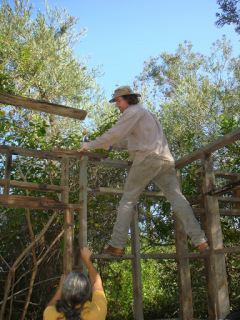
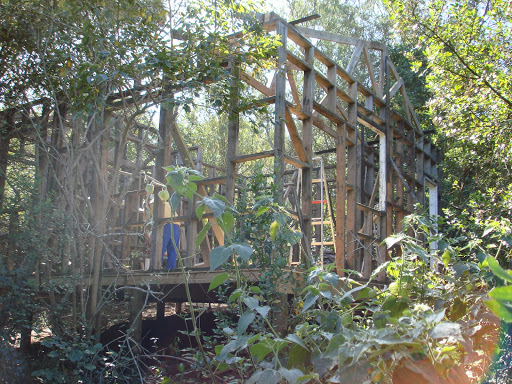
Architects are living through fantastic times in this city and South Africa generally. Not only is there an abundance of work, but a heightened awareness of the value that Architects are able to add to the built environment. There is such a lot of “cool” stuff to do, that I am worried that we try to do too much and loose out on the enjoyment of doing one thing well. I believe though that it is better to take action than to worry!
…So I have taken action.
I love beautiful buildings. Big buildings, small buildings. I love being inside them. The light, the sound, the way people use them. The way they sit in the city or landscape. I love the way these buildings are put together.
There is magic in that; and I am starting to reconnect with this magic.. What surprises me is that I have felt that reconnection not in the billion rand, high visibility, world beating projects running through our office, but rather in something a little more modest….
You see,.. my semi- retired father and I are building a wooden cottage in the Outeniqua indigenous forest. It is a very modest cottage built for family needs; rectangular in plan, with a double pitch corrugated iron roof. When I say we are building the house I don’t mean it as a metaphor for designing and drawing plans for, or a metaphor for sitting around watching the contractor’s progress. No; I mean we are physically, digging, measuring, cutting and fitting (and sometimes knocking down)
It has been great on two significant levels. Let me list them:
Firstly:
When physically building you are compelled to focus on one task. You are compelled to be present. Not to think about the next meeting or the previous phone call. How often do we get a chance to be focussed on the present? Especially those of us in management positions can lead a very fragmented and frantic existence. Many of us have powerful and creative minds but have created a reality for ourselves where we spread our input (and out impact) so thin as not to add the value that we could.
Secondly:
Building in the forest has helped me see the potential of my own hands and energy. I can actually build a house. WOW!
The real truth is that Murray and Roberts could probably build it a little neater. (OK,… a lot neater.) But it is not a competition. We are building the house because that is what we need to do to meet our needs and aspirations right now. We are not building the house to try to compete with Murray and Roberts! But what I am talking about here is something more widespread! A phenomenon that spreads across our lives and effectively limits what we believe we are able to do. We are intimidated by the corporate and media dominated world through which we move every day. We slowly begin to believe that we are not good enough to take action.
We cannot sing as well as Mariah Carey, so we will never dare to sing at a family dinner or in the pub.
We cannot tell stories as well as Stephen King, so why even bother trying.
Mom cannot make clothes as neatly as Edgars, so we’ll rather stay at home than be seen dressed in her homemade tracksuits.
We cannot build as well as Murray and Roberts, so lets not let people laugh at our crooked house!
The net result is that we become intimidated into inaction allowing big corporate and media giants to do for us what we used to do for ourselves, and it only takes a little time before we have lost our skills and our dignity forever.
I have in the forest found the joy and freedom of taking back that which I thought I had been robbed of. Cutting planks, laying boards, nailing trusses.
There is magic in that!
 TimberTiny